REPRESENTENTATIVE STRATEGY PROJECT
Modernize Without Starting Over
HarborPoint had a valued Client Experience Academy—but consistent execution increasingly depended on facilitator interpretation and implied standards. This review clarified what to preserve, where stronger structure was needed, and two practical paths forward.
Quick Snapshot
Organization: Regional insurance and risk-advisory firm
Challenge: A valued live Academy relied on implied standards and facilitator interpretation
Work: Program assessment + modernization strategy
Deliverable: Client Experience Academy Modernization Brief
Strategic decision: Strengthen the current Academy or build a scalable learning system
Preserve the culture. Strengthen the system.
The Situation
HarborPoint had already invested in a live Client Experience Academy focused on professionalism, empathy, ownership, listening, and client-centered service.
The program had cultural value and internal credibility. But as delivery expanded across roles, teams, and locations, consistent performance depended increasingly on individual facilitators and employee interpretation.
Could the Academy continue producing consistent behavior without stronger structural support?
The review identified five areas where stronger structure was needed:
service expectations were not always behaviorally explicit
delivery could vary based on facilitator interpretation
employees had limited practice with complex service decisions
post-session reinforcement was inconsistent
leaders lacked visibility into how standards were being applied
The Academy did not need a new philosophy. It needed a stronger system for carrying that philosophy into daily performance.
The Diagnosis
What Was Already Working
strong cultural alignment
engaging live discussion
emphasis on empathy and professionalism
established internal credibility
Where Consistency Was Breaking Down
standards were often implied rather than observable
delivery could vary by facilitator
practice and reinforcement were limited
leaders lacked visibility into application
What I Did + What They Received
I assessed five areas of the current Academy:
observable service standards
facilitator consistency
realistic scenario practice
reinforcement beyond the live session
measurement and leadership visibility
I developed:
a current-state assessment
five modernization priorities
two practical implementation pathways
leadership-alignment decisions
a phased modernization roadmap
a side-by-side pathway comparison
Representative Deliverable
Client Experience Academy Modernization Brief
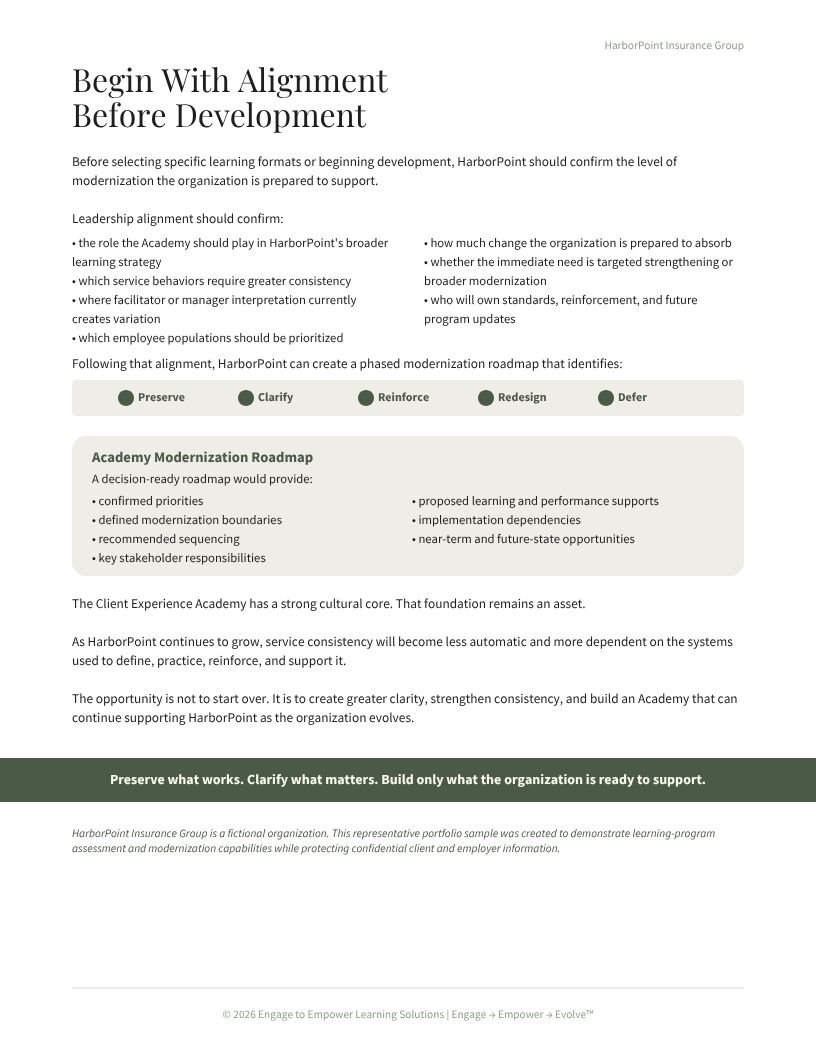
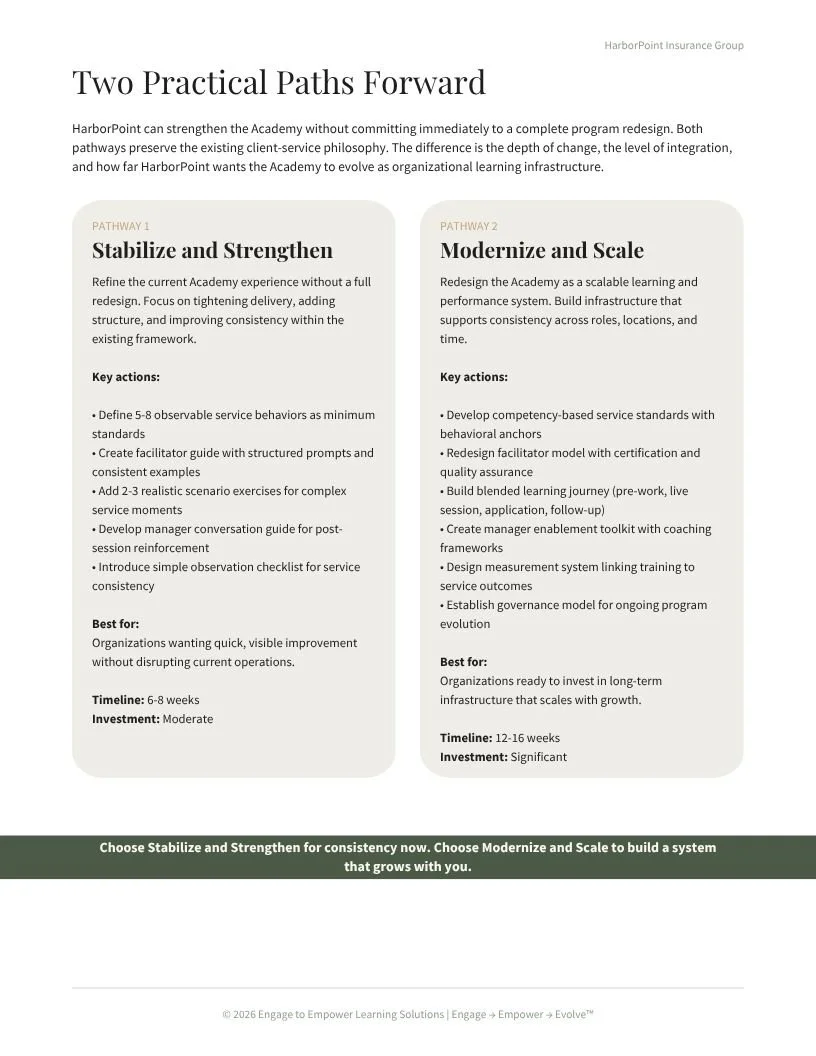
The brief translated the assessment into a decision-ready modernization plan.
It identified what should be preserved, where a stronger structure was needed, and two practical pathways based on organizational readiness.
The brief clarified:
five modernization priorities
two levels of change
leadership decisions required before development
implications for standards, facilitation, practice, reinforcement, and measurement
This helped replace:
general calls to refresh the program
inconsistent facilitator interpretation
one-time event thinking
premature course development
broad modernization ideas without sequencing
With:
clear structural priorities
two realistic pathways
defined leadership decisions
phased implementation logic
stronger alignment between culture, learning, and performance
Representative sample. Client and organizational details have been fictionalized or adapted to protect confidentiality.
The strategy shifted the conversation from:
“What kind of learning system does HarborPoint need this Academy to become?”
to:
“What does HarborPoint need this Academy to become?”
Strengthen what works before you rebuild.
An established program does not always need to be replaced. A focused review can clarify what should be preserved, where consistency is breaking down, and which improvements will create the most value.
Representative Scenario Note: This case study demonstrates the learning program's assessment and modernization capabilities. The organization name, context, and identifying details have been fictionalized or adapted to protect confidential client and employer information.