
Advisory → Clarity Before Build
Representative scenario based on real client work. Names and details are changed.
When the owner thought he needed training, the real issue was that “correct” execution had never been clearly defined.
Quick Snapshot
Business: 25-person HVAC and plumbing company
Problem: Inconsistent service decisions, callbacks, and owner dependency
Service path: Advisory
Timeline: 90-minute working session + written summary
Representative investment: $500
Representative deliverable: Advisory Summary / Decision Snapshot
Advisory
What This Clarified
The Situation
A 25-person HVAC and plumbing company had reached a point where service work felt inconsistent.
The team was capable, but similar customer situations were not always handled the same way. Two technicians could respond to the same type of no-heat issue and make different decisions. Some jobs were completed cleanly. Others led to callbacks, follow-up questions, or the owner needing to step in.
At first, the owner believed the answer was training.
He wanted some kind of training program, because his team handled the same calls differently.
But when we examined the recurring situations, the underlying issue became clearer: the business had not defined what consistent service execution should look like.
The owner could recognize a strong decision when he saw one, but those expectations had never been translated into shared standards the rest of the team could consistently use.
He wasn’t sure what training would even cover, because everyone did the work differently.
This was not yet a training gap. It was an expectations gap.
Why Advisory Was the Right Fit
Building training at that stage would have formalized inconsistency.
The business first needed a shared understanding of what good service execution looked like across common situations. Without that foundation, an SOP, onboarding program, or course would have taught employees to follow standards that had not actually been established.
Advisory was the right fit because the immediate question was not:
“How do we train everyone?”
It was:
“What needs to be consistent before training would be useful?”
That distinction helped the owner pause development, identify the decisions that needed to be made first, and avoid investing in the wrong solution.
What I Did + What They Received
I helped the owner clarify:
why the issue was an expectations gap rather than a motivation gap
where service decisions were being handled inconsistently
which recurring customer situations needed defined standards
where technician judgment could remain
what needed to be decided before training, SOPs, or onboarding materials were built
The owner received:
an Advisory Summary: Service Decision Clarity
a structured view of where expectations were unclear
a Recommended Immediate Actions table with decisions, rationale, and first steps
guidance for defining service expectations before beginning development
a recommended next step focused on the highest-priority service situations
Representative Deliverable
Advisory Summary: Service Decision Clarity
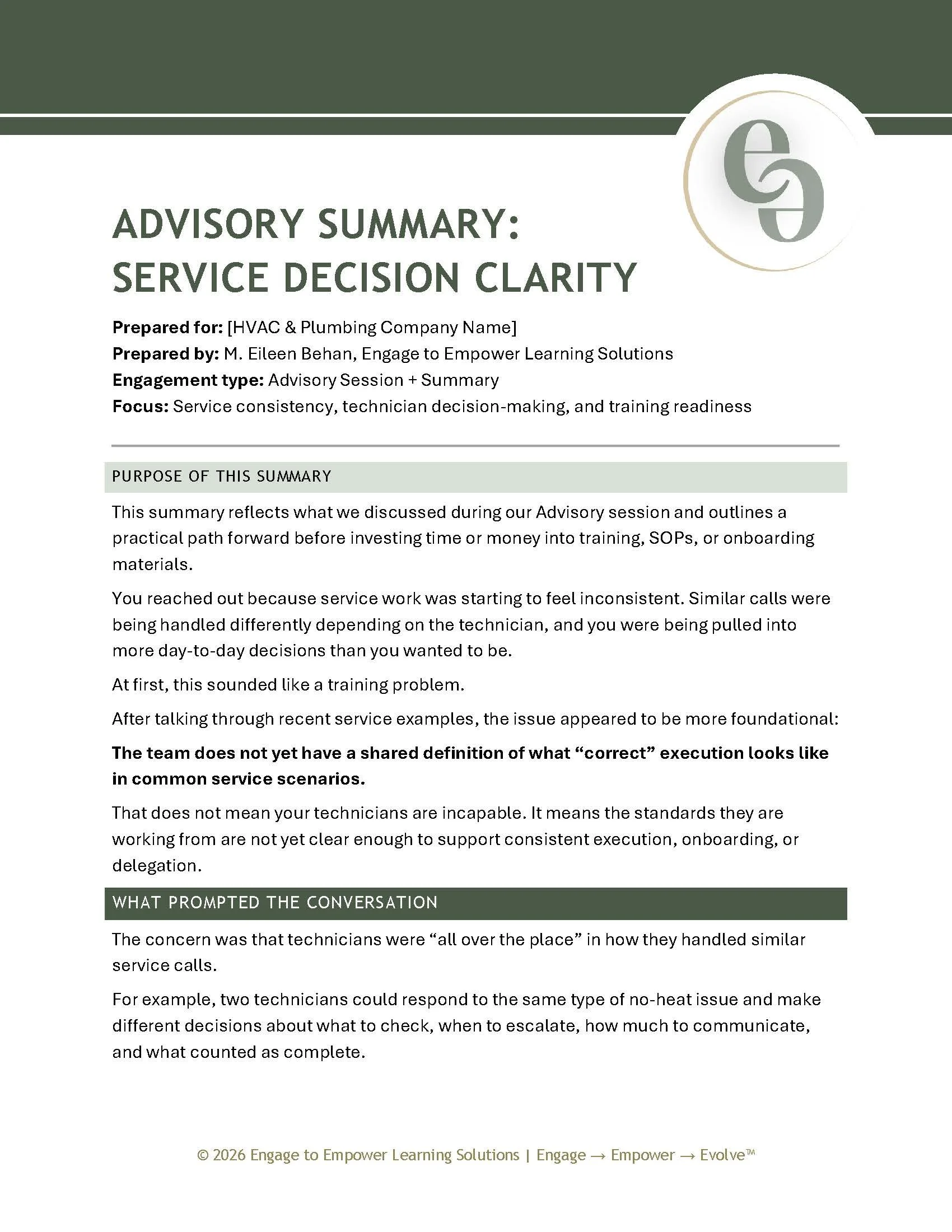
After the Advisory session, the owner received a written summary that helped him see what needed to be decided first and what could wait.
The summary clarified:
what was contributing to inconsistency
which expectations needed to be defined
which decisions should remain flexible
what should happen before training or documentation was built
what the next practical step should be
Representative example. Final deliverables vary by scope.
What the Advisory Clarified
The immediate shift was from building training to defining expectations first.
The advisory gave the owner a clearer basis for deciding what needed to be standardized, where technician judgment could remain, and what should happen before investing in SOPs, onboarding, or training materials.
The value of the engagement was not the size of the deliverable. It was helping the owner avoid building the wrong solution.
The recommendations were designed to address:
moving directly into training without clear standards
repeated mid-job calls and questions to the owner
inconsistent decisions across technicians
callbacks caused by variation in execution
reliance on individual experience instead of shared expectations
The recommended next step was a focused standards-mapping process for the highest-priority service situations.
Investment
$500 — Advisory Session + Summary
This included a focused Advisory conversation and a written summary identifying the likely clarity gap, what needed to be defined before training, and the recommended next step.