REPRESENTATIVE MICROLEARNING PROJECT
Clean Customer Intake and Handoff
A focused microlearning experience designed to help employees recognize when a maintenance request is complete, identify handoff risks, and prepare information the next person can act on without unnecessary follow-up.
Quick Snapshot
Organization: Residential property management company
Challenge: Incomplete maintenance requests caused delays, repeated tenant follow-up, and inconsistent handoffs.
Work: Microlearning design and development
Deliverable: Rise microlearning, decision practice, audio examples, and quick-reference checklist
Learning focus: Recognize a clean handoff, identify missing information, and prepare a request for the next step
Tools: Articulate Rise, Storyline, Audacity, Adobe Audition, and visual design tools
A clean handoff gives the next person enough to act.
The Situation
Maintenance requests were being submitted, but the quality of the information varied.
Some included the details needed to move the work forward. Others left out important context, used vague descriptions, or required the next employee to contact the tenant again before the request could be assigned or resolved.
The result was avoidable back-and-forth, slower response times, and greater dependence on experienced employees to recognize what was missing.
The need was not more information. Employees needed a clear standard for what a complete request looked like, practice recognizing where a handoff could fail, and something practical to reference while doing the work.
The Design Decisions
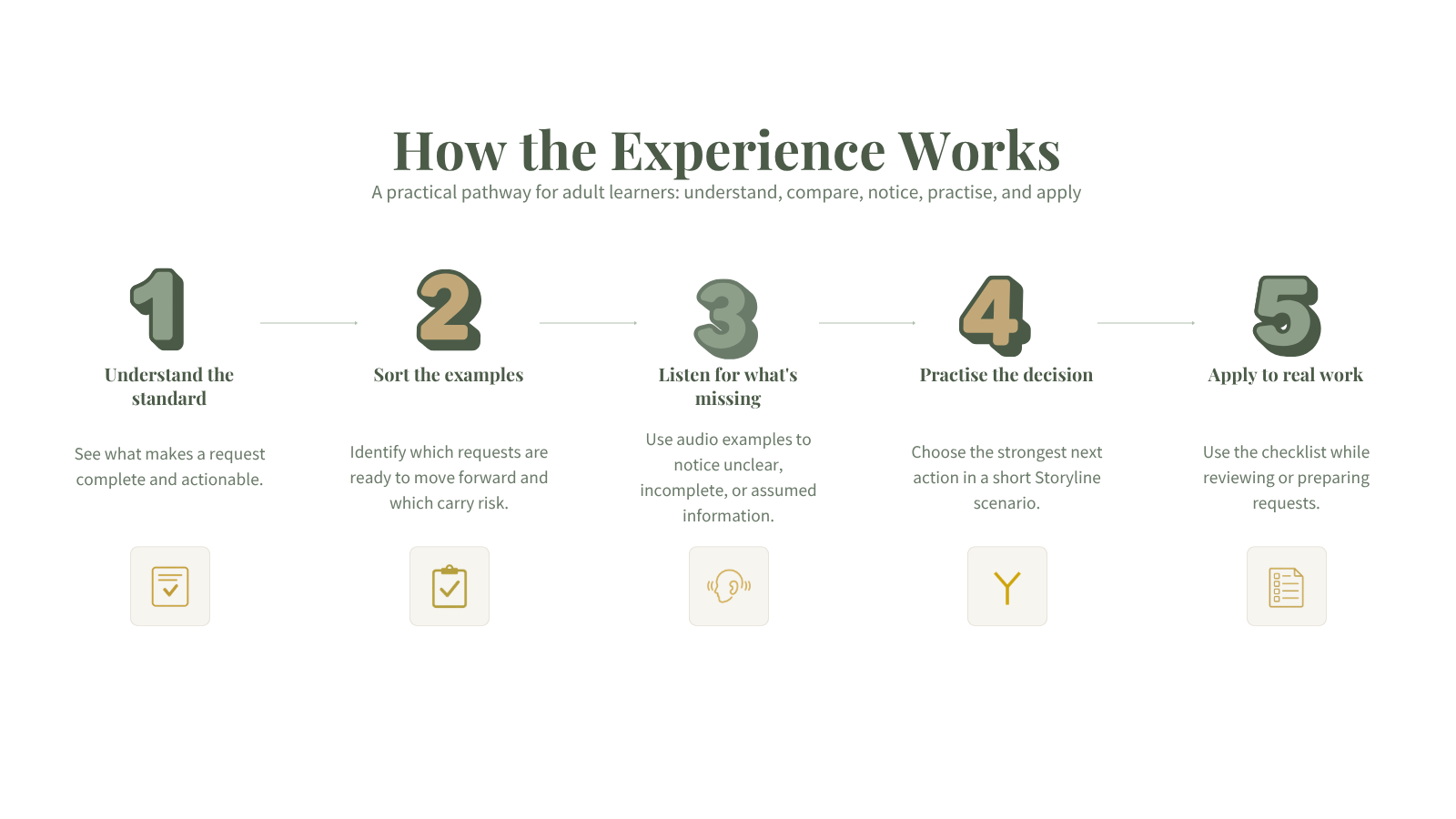
Teach the Standard
Employees first needed a clear picture of what makes a request complete, usable, and ready for the next step.
Practice the Judgment
Examples, audio, and decision practice help employees notice vague descriptions, missing details, and assumptions.
Support the Work
A quick-reference checklist keeps the standard available after the learning is complete.
Explore the Finished Work
Clean Customer Intake and Handoff Microlearning
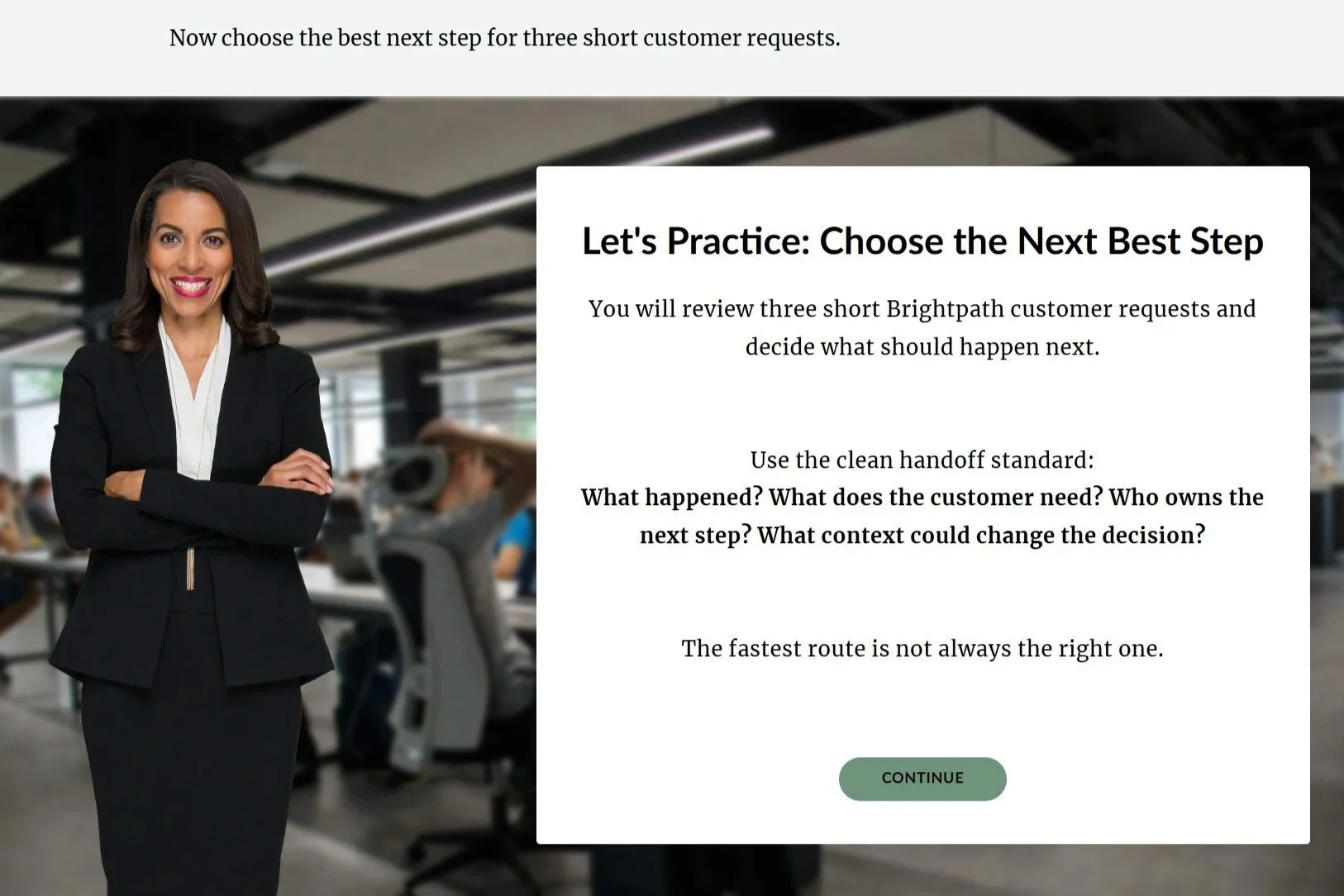
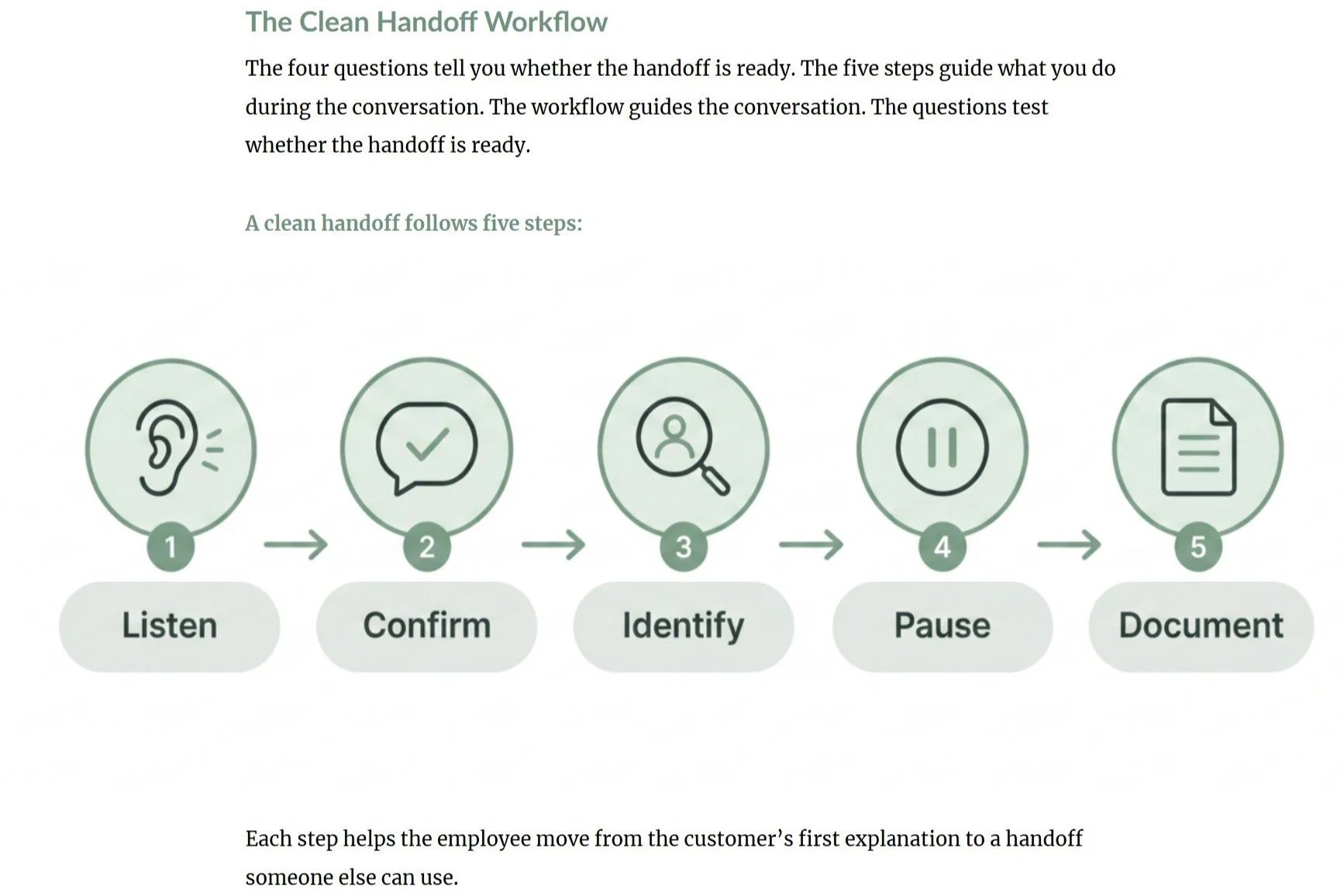
This microlearning combines concise instruction, examples, audio, workflow guidance, and decision practice around one clear performance need.
Employees are not only shown what a complete request looks like. They practice recognizing where a handoff may fail, identifying what is missing, and deciding what must happen before the request can move forward.
Opens in a new tab. Best viewed on desktop.
Why This Format
The problem did not require a long course.
Employees needed a shared standard, a chance to practice applying it, and a reference they could use while the work was happening.
The microlearning keeps the instruction focused while still including examples, audio, feedback, and decision practice. The checklist carries the standard beyond course completion and reduces dependence on memory or informal explanation.
What This Sample Demonstrates
Instructional Design
performance-focused analysis
microlearning structure
scenario and feedback writing
practice aligned to the work
learning and performance-support integration
Development
Articulate Rise
Storyline interaction
audio integration
visual design
workflow translation
quick-reference development
Build learning that reaches the work.
A focused learning experience can do more than explain a standard. It can help people recognize it, practice it, and use it when the work is happening.
Portfolio note: This sample has been recreated and anonymized for portfolio use. Names, identifying details, and proprietary content have been changed, while the underlying performance need, instructional approach, and deliverables remain representative of the work.